Dandy Definition Why Does Antonio Continue to Lend Bassanio Money

Riku Sayuj's Reviews > The Merchant of Venice
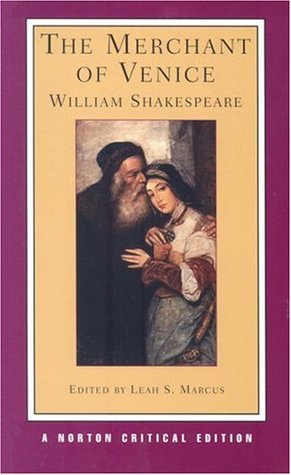
by

"One had best state this matter very plainly: To recover the comic splendor of The Merchant of Venice now, you need to be either a scholar or an anti-Semite, or best of all an anti-Semitic scholar."THE BLACK SWAN OF VENICE
~ Harold Bloom***
See how yond justice rails upon yond simple thief.
Hark in thine ear: change places, and handy-dandy,
which is the justice, which is the thief?
~ King Lear (IV.vi.151–4)***
"Which is the merchant here? and which the Jew?"
~ The Merchant of Venice
The traditional interpretations are usually on the lines of 'accept the play as what it is - a comedy that utilizes stereotypes' or on 'Shakespeare managed to use a stereotype and yet humanized him and created one of the great characters in theatre'. Truly, the scope and diversity of theatrical interpretations of the Merchant are extraordinary, and there have been many new and exciting attempts at understanding the play over the centuries. In addition, its racism has often been reversed in performance, converted into an eloquent plea for human equality. Indeed, in some ways the play has been instrumental in changing people's perceptions of the Jewish community, and it therefore occupies a valuable place in world culture.
It is said that Merchant of Venice is one of the most performed plays of all time and has continuously been in production for over 300 years now. Is there a reason why it is so popular? It is partly due precisely to this breadth of interpretation that is possible, and partly due to the immense challenge thrown up by the character of Shylock.
Shylock can be interpreted in many ways on the stage. He can be seen as a simple comic villain who occasionally reveals sympathetic qualities. Or he can be a tragic hero, a spurned and battered victim of oppression, who tries unsuccessfully to challenge the society that oppresses him. Similarly, the Christians can be saintly personifications of charity and mercy, or hypocritical money-grubbers. It may seem strange that a play can produce such divergent readings, but they are, in fact, a result of the complexity of Shakespeare's writing.
It is a play that is curiously capable of moulding itself to our present, we only have to project the current OTHER into the role of Shylock - as many directors over the centuries have done.
It allows reinterpretation as per this current Other - and can then be a vehicle for showcasing a sense of how a historic wrong is ripe for correction!
What this sort of interpretation of Merchant of Venice misses is that both Venice and Shylock were 'The Other' to each other. They were both incomprehensible to the other.
The Directorial Debut: A World Without BelmontKeeping this in mind, now, if I were to direct the play today, I would focus on these things:
1. The risky speculative nature of Antonio's ventures.
2. The twisting of the laws by Portia to 'bail out' Antonio and to make Shylock bear the brunt of Antonio's speculations.
In a bit more detail, this would be my approach towards the production:

Shylock: Shakespeare uses 'Jew' and "Shylock' in the play depending on whether he wants to humanize him or not. 'Shylock' is used where involvement in his feelings is indicated; and 'Jew' is used when Shakespeare sees him purely as a moneylender, as a stereotype. It is significant that at the very end, in the Trial Scene, 'Shylock' is used by Shakespeare and not 'Jew'!
I would extend this to its extreme - humanize Shylock completely, strip him of his 'monstrosity' status and of his usurer brand and make him the common family man, downtrodden occasionally, trying to get by.
Antonio: is given no real reason for nobility in the play except his Christian credentials - I would strip him of those and make him just what he is, a speculator with many failings with no cushion of Christianity to fallback on. A quintessential Wall-Street figure.
I might or might not keep the personal enmity between Shylock and Antonio. That would add dramatic value, but serves no purpose as far as my core message is concerned.

Belmont: An outlandish element of this most realistic of Shakespeare's plays is Belmont - the land of magic where casket-tests and ring-tests determine 'true love' and fidelity, where pure love always wins - a fairy tale land. It is a world where money has no role, where no class differences occur (or are not allowed since only the privileged enter!) because the oppressed don't have a role (notice, no Jews in Belmont!), which might have been an impossible but still acceptable dream for much of human history (Voltaire-like), but which crumpled maybe around the middle of this century, with our disillusionment with European dreams of any poised land. We don't have a place for such a trope in our production.
The Merchant of Venice is a very serious play - Shakespeare made it a romantic comedy by nesting the parallel story of Belmont and its idealism, its fairy tale caskets, the Jason-like Quest etc.
But we don't have to take it with the same levity. We can take it more seriously. We can consider a world without Belmont!
My play would then be set in this "World Without Belmont".
Shylock, even back then, is a controversial figure for villain and has not been accepted as such for a long time now. Shall we have another villain for ourselves? - Let me present to you, Antonio!
Here, Antonio becomes a Speculator who uses borrowed money to finance risky expeditions on a false sense of self-assurance, in spite of being warned right at the beginning of the play by all his friends - ignorantly over-confident, and rather stupid because he is so lacking in common sense. They have the wisdom by their wit to lose.
When they do choose,
Shylock becomes the common man who was assured that his money would never be risked (a 'merry bond' sold to him??) and Bassanio becomes the Aristocracy who meanwhile uses the public money for self-indulgence and exotic adventures.
~ E. E. StollIf you sympathize with Shylock, then you must turn against Portia.
Portia: Portia, in my production, becomes the conservative defender (who is also not above some blatant racism!) of these values who would try to get the state to sponsor these extravagances and is even wiling to twist the law - a complete Deux Ex Machina - are we really to think Shylock, and anybody else, did not know of these laws that Portia presents? To me Portia has used their assumption of her competence to full advantage. The only way to explain it would be 'Poetic Justice' or more crassly - Cheating!
Portia does this 'twisting' to try and make the poor Shylock shell out even more of his personal fortune, who is almost struck dumb when the State and Law that he had placed his belief on turn on him - "Is that the law?" is all he can ask. He was absolutely certain that his trust in the law was inviolate. The Law and the State that he believed to be so solid crumbles before him. He sees what power privilege has in this world. Wrest once the law to your authority. To do a great right, do a little wrong, And curb this cruel devil of his will.
And I beseech you,
Thus making Shylock representative of the common man, who is a mirror to the society's worst atrocities - by trying to take exacting revenge on the Wall-street speculator Antonio; and by trying to point out the many wrongs of his society, such as slavery back then or enforced poverty today. The common man, whose tax dollars and life-savings are used to finance the risky ventures of the Antonios and the Bassanios.
Of course, they don't have to worry, the conservative state represented by the Duke (talk of an impartial judge - he starts the trial by calling Shylock names! And proceeds to threaten to annul the whole thing when Shylock seemed on the verge of winning) and by Portia, who will, with her ingenious manipulations of the law, ensure that Shylock not only loses but also accepts their value systems! "I am content" he says and disappears from the play, into the black-hole that is the State - an Orwellian vision. Shylock: I am content.
Portia: Art thou contented, Jew? What dost thou say?

In this 'World Without Belmont', we have to notice that the upholding of Justice is done not for nobility or any love of justice for its own sake but to ensure that the 'too big to fail' establishments are not allowed to sink - just as "The trade and profit of the city" of Portia's Venice depends on the confidence foreigners have in Venetian law. Thus it is not love of justice for her own sake, but mere self-interest, that keeps our play's world within the law.
Thus, going from the 'New Comedy' aspect of Merchant of Venice to a full blown Tragedy, I would end my modern production with this Shylock slighted and stolen of his possessions, the Antonios and Bassanios happy in the thought that they can continue their indulgences at the expense of the public, while strictly following the letter of the law, no less… and a dark foreboding of when this whole structure will collapse, no matter how well hedged by class distinctions and 'just' laws.
Encore: "Which is the merchant here? and which the Jew?"
Reading Progress
Jewish name in Shakespeare's day. The nearest biblical approximation is 'Shiloh' (Gen. 49.10), which incongruously means 'Messiah'!"
- Mutating ominously like some live creature!
(Which again fits the theme of money 'breeding'!)"
That ever blotted paper!"
Comments Showing 1-26 of 26 (26 new)
back to top
add: link cover
Welcome back. Just a moment while we sign you in to your Goodreads account.

Source: https://www.goodreads.com/review/show/823093647
0 Response to "Dandy Definition Why Does Antonio Continue to Lend Bassanio Money"
Post a Comment